Abbeville's Bailey Bill Historic Home Tax Freeze: Timing Matters
September 24, 2026
September 24, 2026
Since the City of Abbeville adopted its Bailey Bill ordinance in March 2021, nine projects have used it to freeze their property taxes during a historic renovation. Those nine projects together represent more than $14 million in investment in the city's older buildings. Seven of them are commercial properties. One is a home.
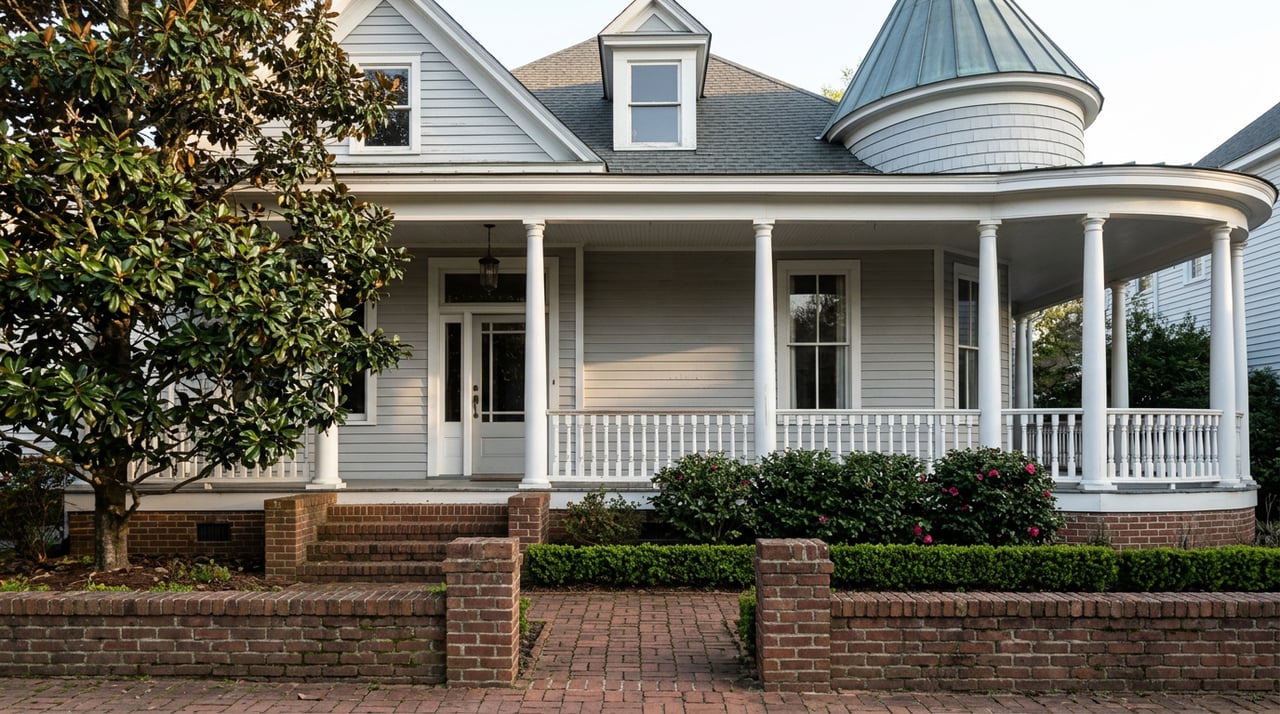
That split is the story. The incentive was written to cover both business owners restoring a storefront on Court Square and a family fixing up a Second Empire cottage three blocks off it. Almost nobody in the second category is asking for it. Not because the freeze doesn't apply to them. Because of a timing rule buried in the ordinance that most buyers only learn about after it's too late to use.
The Bailey Bill is state law, not a city invention. South Carolina Code Sections 4-9-195 and 5-21-140 let any county or municipality offer a special property tax assessment on a rehabilitated historic building, and the mechanism is the same everywhere it's adopted: the county keeps taxing the property at its fair market value from before the renovation, even after the renovation raises what the place is actually worth. You pay tax on the old number while living in the new house.
Abbeville and Abbeville County adopted a joint version of the ordinance in 2021, and the City of Abbeville's Small Business Incentives page says the freeze runs for ten years once a project earns final certification from the city's Bailey Bill program. That ten-year window is worth pausing on, because it's shorter than what some other South Carolina cities offer. The Town of Clover and Town of Fort Mill both lock in the pre-rehab value for a full 20 years, provided the owner spends at least 20 percent of the property's fair market value on qualifying work. The City of Columbia's Historic Incentives page describes its version the same way. Abbeville's ordinance caps the benefit at half that span. It's still real money over a decade. It's just a smaller version of the tool than what a buyer might find one county over.
Eligibility in Abbeville comes down to two paths. A property needs to sit inside the city's Historic Overlay District and be at least 50 years old, or it needs to already carry a listing on the National Register of Historic Places. Either one gets you in the door.
The Historic District itself covers a wide swath of downtown, anchored by Court Square where the county courthouse and municipal building sit alongside a run of late 19th century brick commercial buildings. Within its boundaries are 528 properties, and 319 of those are officially recognized as contributing to the district's historic character, spanning styles from Second Empire and Gothic Revival to Queen Anne and Bungalow.
To make that concrete: the Simpson-Power-Mattison House at 510 North Main Street, built around 1907, was on the market this year at $389,000 and carries a designation as Historical Stop 40 on the city's walking tour. A home like that, sitting inside the district, would clear the age and location bar without any argument. The Burt-Stark Mansion, a National Historic Landmark since 1992, shows the other path into eligibility for a property that sits outside the district boundary but carries its own National Register listing.
Neither example needed to be commercial to qualify. That's the point the seven-to-one ratio obscures.
Here's the sentence from Abbeville County's ordinance that does the real work in this story: the special assessment cannot be applied retroactively, under any circumstances, once work has begun.
That single rule is why most of the homeowners who'd benefit from this freeze never end up using it. A commercial developer taking on a $750,000 storefront restoration almost always has an architect, a contractor, and often a preservation consultant lined up before a permit gets pulled. Filing for preliminary certification before demolition starts is just one more item on that team's checklist. A family that buys an older house on North Main Street and decides over their first winter there to finally redo the kitchen doesn't have that team. They pull a permit, they start work, and by the time anyone mentions the Bailey Bill to them, the rehabilitation they'd want credit for is already half finished. The ordinance has no mechanism to retroactively cover it.
This is also, most likely, the difference between the one residential project that has used the freeze and the majority that haven't. Somebody in that case knew to ask the question before the first wall came down.
If you're weighing an older Abbeville property with renovation in mind, the sequence matters more than any other detail here. Getting the order wrong is the only way to lose the incentive entirely.
None of these steps are difficult on their own. The difficulty is remembering that step three has to happen before step two's contractor shows up with a dumpster.
If you're comparing prices on Abbeville homes, you've probably already noticed the numbers don't agree with each other. One home value index puts the city average in the low $200,000s as of earlier this year, a separate median listing snapshot runs closer to $300,000, and a recent median sale price came in well above both of those, based on a sample small enough that a single outlier property could be doing most of the work. None of those numbers is wrong. They're measuring different slices of a market where recent comparable sales matter more than any single citywide average, because older housing stock means no two properties are renovated to the same degree.
That same variability is exactly why the Bailey Bill matters more here than in a market full of identical new construction. A ten-year property tax freeze changes the real cost of taking on a fixer-upper, and it can be the difference between a renovation that pencils out and one that doesn't. But it only works if the paperwork happens in the right order, and that order isn't intuitive to someone who's never bought inside a historic district before.
If you're an executor handling an inherited property in downtown Abbeville, there's a useful wrinkle here too. The ordinance specifically states that selling or transferring ownership of a Bailey Bill certified property does not disqualify it from the special assessment. If a home already carries certification, that freeze passes to the next owner along with the deed.
This is the kind of detail that's easy to miss and expensive to miss. If you're considering a historic property in Abbeville, whether it's a straightforward purchase, a renovation project, or an estate you're settling, talk to someone who can walk the timeline with you before the first permit gets pulled. Reach out to Premier Properties Real Estate Team and schedule a local market consultation. Joan Timmerman's team has spent more than two decades working through exactly this kind of local process, and getting the order right from day one is the whole game.
If I buy a home that's already Bailey Bill certified, do I keep the benefit? Yes. The ordinance is explicit that a sale or transfer of ownership does not disqualify a certified property from continuing to receive the special assessment for the remainder of its term.
What if I've already started renovating before learning about this program? Unfortunately, the ordinance does not allow the special assessment to be applied retroactively. Preliminary certification has to be in place before rehabilitation work begins, which is why confirming eligibility and filing early is the single most important step in the whole process.
This article is general information, not legal, tax or financial advice. Consult a qualified professional about your situation.
Continue learning with more blogs from our team.

Whether buying or selling, we provides the guidance and service you need for success.
GET IN TOUCH
ADDRESS GREENWOOD SC 29649