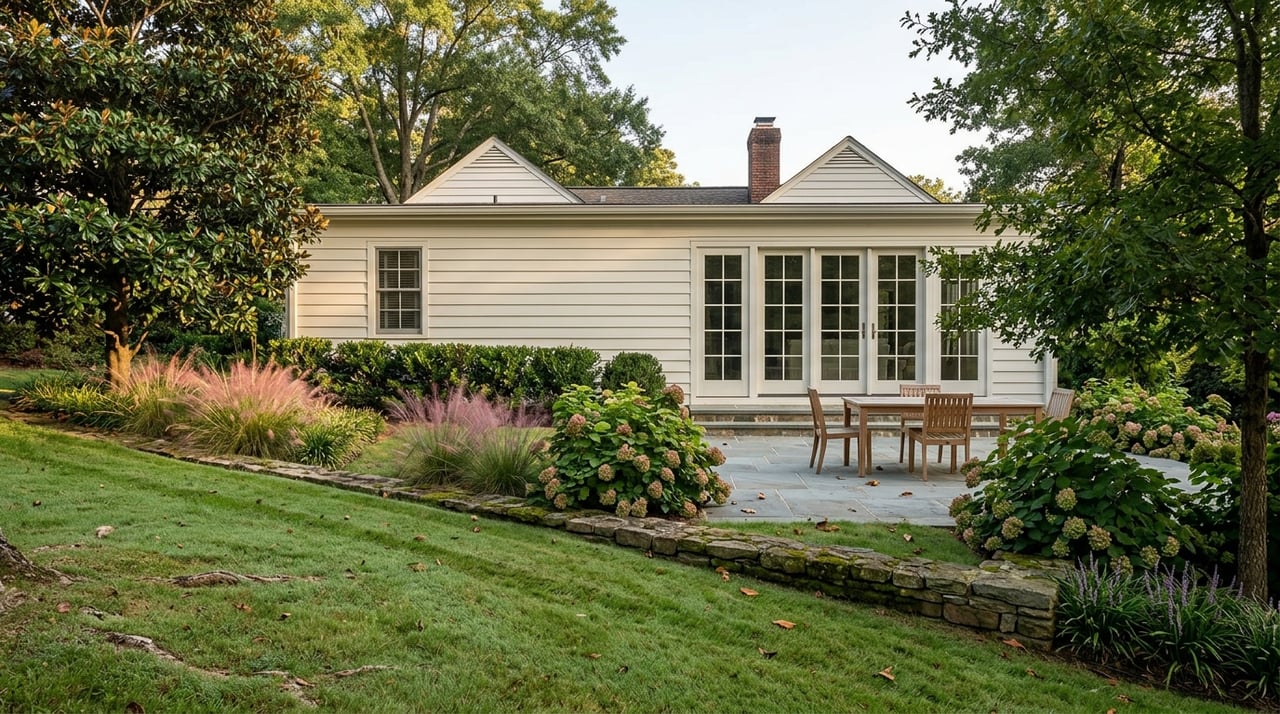
What to Know About a Lake Greenwood Dock Permit
August 27, 2026
August 27, 2026
You walk the yard, you see the water, you see the dock sitting right where the listing photo promised it would be, and you assume it comes with the house the same way the deck does or the detached garage does. It doesn't. The moment you step past the seawall and onto that structure, you have left the property you're buying and entered land that belongs to Greenwood County. The dock is a permit, not a fixture, and permits have their own rules, their own calendar, and their own ways of saying no.
That distinction rarely comes up until a buyer is deep in due diligence on a Lake Greenwood property, wondering why the seller can't just hand over "the dock papers" the way they'd hand over an HVAC warranty. There aren't dock papers in that sense. There's a county department, a set of engineering limits, and a seasonal water schedule that has nothing to do with who owns the house.
Greenwood County owns the bed of Lake Greenwood, and it regulates every structure that touches it through the Lake Management Department, created in 2006. That office does more than approve docks. It handles registration of shoreline encroachments, camping reservations on Goat Island, larvicide and herbicide applications, upkeep of public access areas, compliance with the lake's federal operating license, and inspection of existing docks and seawalls. A private dock sits inside a much larger regulatory function that treats the entire shoreline as a managed public resource.
That framing matters for a buyer. A house sale transfers a deed. A dock permit is a separate authorization tied to a specific piece of shoreline, and it can be denied, delayed, or found lapsed independent of anything happening in the purchase contract.
If you cross your seawall and step onto the water side of it, you're no longer standing on your own property. You're standing on the county's.
Every dock on Lake Greenwood answers to the same engineering ceiling, regardless of lot size or price point. A buyer picturing a custom boathouse should check these limits before falling for a builder's rendering.
| Rule | Limit |
|---|---|
| Maximum dock length | 110 feet, and never more than one third of the distance to the opposite shoreline |
| Maximum surface area | 1,200 square feet |
| Setback from a neighboring dock | 20 feet |
| Boathouse style | Open sides only, no enclosed boathouses |
| Plumbing | No sinks, toilets, or showers |
| Boat lift extension | No more than 25 feet past the 439 foot line, and never past the 436 foot line |
The 436 and 439 foot figures aren't arbitrary. They're elevation lines the county uses to define the lake itself, and they show up again in the rule that governs when construction can even happen.
Full pond on Lake Greenwood is considered elevation 439 feet. Every year, starting at the end of October, the county draws the lake down toward roughly 434.5 feet and holds it there through the winter before raising it again beginning in late January. That's a swing of close to five feet, and it isn't weather or drought. It's a federally mandated operating rule that repeats on the same schedule annually, the way a tide chart repeats.
That drawdown is why local contractors split their year in two. Seawall work happens in winter, when the lower water exposes the base of the wall. Dock construction happens the rest of the year, once the lake has climbed back toward full pond. A buyer who closes on a Lake Greenwood property in November, expecting a new dock in place before Memorial Day, needs to fold that January reset into the timeline rather than assuming a contractor can start the week after closing.
This is the piece that trips up buyers moving from a market where waterfront construction runs on the builder's calendar, not the reservoir's.
Not every shoreline segment on Lake Greenwood qualifies for a dock at all. Some stretches are designated protected habitat, where the county won't approve any new shoreline improvement or modification, regardless of how the property is marketed or what the neighboring lot has. The county's own guidance names property line issues and protected habitat as the two most common reasons a dock permit gets denied.
That means "lakefront" in a listing description and "dock-eligible" in county records are two different facts, and only one of them shows up in most photos. A buyer whose entire decision rests on having a private dock should confirm eligibility on that specific parcel before assuming a waterfront lot automatically comes with permission to build one.
Around Lake Greenwood, dock work happens in communities with very different governance. Newport, Grand Harbor, Harborside, Stoney Point, The Plantation, The Retreat, and other established subdivisions each run their own architectural review, and buyers naturally assume that committee is the final word on what happens at the water's edge. It isn't. Every one of those neighborhoods still answers to the same county encroachment permit, the same size limits, and the same annual fee, no matter what the covenants say.
At the other end of that spectrum, some Lake Greenwood parcels carry no HOA at all. A buyer on one of those unrestricted lots still owes the county's annual encroachment fee if they want to keep a dock registered, historically around $50 and due by September 1 each year. Strip away the covenant committee entirely and the county rule is still there, unchanged. That's the clearest evidence that the real permitting authority for any dock on this lake has never been the neighborhood. It's the county.
A few questions belong in due diligence, not in a punch list after closing.
Does every Lake Greenwood property come with the right to build a dock? No. Some shoreline is designated protected habitat where new encroachments aren't approved, and property line issues can block a permit even where neighboring lots already have docks.
Can an existing dock's permit lapse? Yes. Even repair work on a standing dock or seawall requires its own permit from Lake Management, and the annual encroachment fee due each September 1 is what keeps an existing registration current.
Can I build an enclosed boathouse instead of an open one? No. Greenwood County allows open-sided boathouses only, a rule built around keeping sightlines clear so boaters can see each other on the water.
Connect Lake Greenwood, the community group that tracks these rules for residents, lays out the Rule Curve elevations and dock specifications in plain language on its FAQ page, and it's worth reading alongside anything a listing agent tells you.
None of this is a reason to avoid Lake Greenwood waterfront. It's a reason to ask the dock question before the inspection contingency runs out, not after. Joan Timmerman and the team at Premier Properties Real Estate Team walk buyers through exactly this kind of shoreline due diligence on every Lake Greenwood offer, because a dock that looks finished in a photo can still be an open question with the county. If you're evaluating a waterfront property anywhere on this lake, schedule a local market consultation before you write the offer, not after you've already pictured next summer from the end of the pier.
Continue learning with more blogs from our team.

Whether buying or selling, we provides the guidance and service you need for success.
GET IN TOUCH
ADDRESS GREENWOOD SC 29649