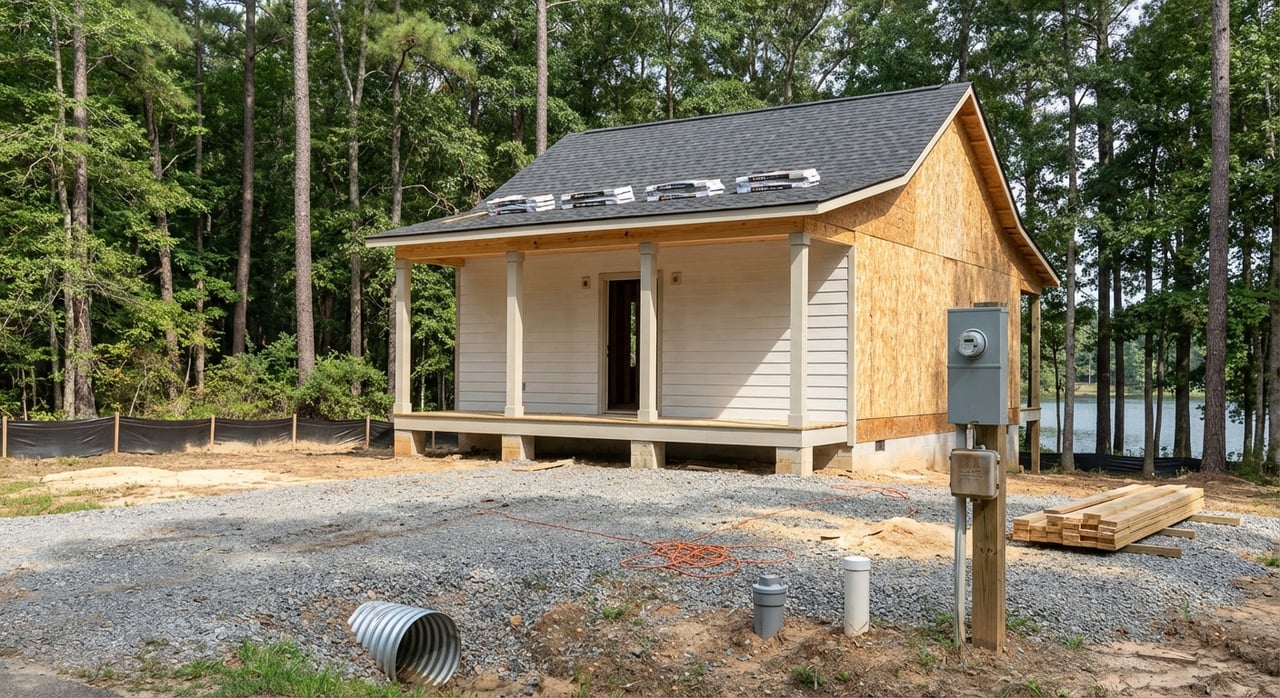
Dreaming about a simple, cozy cabin where your weekends open with sunrise over Lake Greenwood? Building near Cross Hill can be a smooth experience when you know the rules, the right order of steps, and which pros to call. You want clear answers on docks, septic, wells, and permits so you can plan with confidence and protect your budget. This guide walks you through the must‑knows for Lake Greenwood lots near Cross Hill, with a practical checklist and local contacts to get you started. Let’s dive in.
Lake Greenwood basics for cabin planners
Lake Greenwood is managed by Greenwood County, which regulates docks, piers, and other structures that extend into the lake bed. If your dream includes a private dock or boatlift, loop in the county’s lake management office early to understand encroachment rules and fees. You can review current guidance at the county’s Lake Management page for Lake Greenwood regulations and permitting requirements. Visit the Greenwood County Lake Management page for details.
Around Cross Hill, parcels can fall within Laurens, Greenwood, or Newberry counties. Confirm the county for any lot you’re considering and contact the town or county planning office during due diligence. You can reach the town via the Town of Cross Hill contact page.
Many lake parcels rely on private wells and onsite wastewater systems. South Carolina’s onsite wastewater rules require a soil evaluation and a state permit before you build a home that is not on sewer. Learn the process and permit basics at the South Carolina onsite wastewater program.
Before you write an offer, line up the essentials:
- Current survey and title review for shoreline easements and access rights.
- FEMA flood check for the exact parcel using the official map tool.
- Any HOA covenants or lake community rules that may affect docks or home design.
- Utility availability letters for electric and water, plus broadband checks.
- Septic permit history and a soils report, or plan a new soils evaluation.
Choose the right lot: due diligence essentials
Shoreline rights and dock rules
Greenwood County owns the lake bed and regulates encroachments, so lakefront ownership does not automatically include the right to build a dock. If a dock or boatlift matters to you, review county encroachment rules and ask the seller for any prior approvals or denials. Start with the Greenwood County Lake Management page and review any neighborhood covenants that may be more restrictive than county rules.
Floodplain and FEMA mapping
You or your lender will check FEMA flood status for your exact lot. Use FEMA’s Flood Map Service Center to pull a parcel‑level map and print a FIRMette for your records. Start at the FEMA Flood Map Service Center.
Wetlands and federal review
Work in or near water can involve the U.S. Army Corps of Engineers. Some small docks qualify under general permits, while others need a specific authorization or a jurisdictional determination. Connect with the Charleston District early if your project may affect waters or wetlands. Review the permit pathway at the USACE regulatory program page.
Septic soils and permits
If the lot is not on sewer, septic is a key step. The state requires a site and soil evaluation, and the resulting permit will specify the system type and location. Depending on soils, you may need a conventional or an engineered system. Learn the process at the South Carolina onsite wastewater program and, if needed, find a local expert through the state’s list of professional soil classifiers.
Wells and water supply
Many lake cabins use a drilled well, which must be installed by a licensed driller and documented with the state. Expect a short Notice of Intent review and a required notification before drilling. Verify licensing through the state at SC LLR well driller licensure. If public water may be available, request a written capacity and availability letter from the serving utility. For portions of the lake area, Greenwood CPW operates public water service; view system details at the SC Drinking Water Watch record for Greenwood CPW.
Access, driveways, and road rules
Confirm that your parcel has legal vehicular access and whether the road is county maintained, private, or part of a subdivision. You may need a driveway or culvert permit if your access ties into a county road. Start with the Laurens County Planning Commission to understand local procedures.
Permits and the right sequence
Following the right order protects your timeline and budget. Here is the typical path for a small cabin near Lake Greenwood:
- Address verification and E‑911 assignment so utilities can process your service request. Check with your local county or town office. See the Laurens County Planning Commission.
- Septic site evaluation and state permit application. The permit will define the system and allowable bedroom count. Review the process at the SC onsite wastewater program.
- Well Notice of Intent and drilling with a licensed driller, if you are not on public water. Verify licensing via SC LLR.
- Local building permits from the county or municipal office, including trade permits and inspections.
- Dock or shoreline encroachment permit for any structure in the lake bed. See Greenwood County Lake Management.
- USACE verification or authorization if your activity affects waters or wetlands. Start at the USACE regulatory program page.
Erosion control and land disturbance
South Carolina and local agencies regulate land‑disturbing work and require erosion controls on many projects. If you plan significant clearing or grading, be ready to submit a stormwater plan or follow required best practices. Early coordination helps you avoid stop‑work orders and fines.
Typical timelines to expect
- Septic permit: allow several weeks to a few months, depending on soils and review queues. Engineered systems can take longer.
- Well work: administrative review can be short, drilling is often 1 to 3 days, and testing and paperwork add time based on your driller’s schedule.
- Building permits: simple plans can move faster, while engineered structures may take longer based on local workloads.
- Dock and USACE coordination: straightforward cases may be verified in about 30 to 60 days, while projects with wetlands or cultural resources can take multiple months. Start this early.
Utilities, broadband, and service planning
Power service around Cross Hill may come from investor‑owned utilities or local co‑ops. Costs for line extensions or transformers can affect your budget, so request a written estimate early in due diligence.
For water, many lake parcels rely on private wells. In some areas public water is available, often through local utilities such as Greenwood CPW. Always request a written water availability and capacity letter. The CPW system details are in the state database at the Drinking Water Watch record for Greenwood CPW.
Septic service is critical. If no permit exists, budget for soils work and the possibility of an engineered system if soils are shallow or seasonally wet. Hire licensed professionals familiar with lake‑area conditions.
Broadband options vary by subdivision and street. Some pockets have cable or fiber, while others use fixed wireless, DSL, or satellite. The FCC National Broadband Map guide can help you check providers for a specific address. If you plan to work remotely, test cellular coverage at the lot and confirm antenna placement before you finalize house plans.
Budget: what drives total cost
- Land price. Lakefront and lake‑access lots vary widely around Cross Hill and Lake Greenwood. Prices depend on frontage, neighborhood amenities, and whether a septic permit or dock approval already exists.
- Structure cost. A rough working range for new construction in South Carolina often runs about 150 to 300 dollars per square foot depending on finishes and complexity. Steep slopes, rock, or specialized foundations can increase costs.
- Site work. Septic type, well depth and treatment, electric line extensions, driveway and culvert installation, extensive tree removal, erosion control, shoreline stabilization, and dock construction can add meaningful dollars. Get written utility and tap fee quotes before you commit.
Avoid roadblocks: common pitfalls
- Do not rely on a generic comment like “has septic.” Ask for the permit file and soils report, and verify the permitted bedroom count.
- Start dock conversations early. Greenwood County permits encroachments into the lake bed, and the Corps may need to verify your project too.
- Confirm who maintains the access road and that you have legal easements if the road is private.
- Expect seasonal delays. Heavy rains can affect soil tests, drilling, and foundations, and contractors may have limited seasonal windows for docks.
Your local team: who to hire
- Local buyer’s agent who knows Lake Greenwood and Cross Hill’s multi‑county nuances.
- Surveyor for boundary, topo, and shoreline reference lines.
- Real estate attorney or title company for easements, riparian rights, and covenants.
- Licensed professional soil classifier or engineer for septic soils and layout. Use the state’s list of professional soil classifiers.
- Licensed well driller who handles the Notice of Intent and completion documentation. Verify via SC LLR well driller licensure.
- Licensed residential builder or general contractor, with local references.
- Dock and marine contractor to design your pier and manage the encroachment application to the county and any federal notices. Start with Greenwood County Lake Management.
- Land‑clearing and erosion control contractor who follows local stormwater practices.
Action checklist: offer to keys
- Pre‑offer: pull the APN, run a FEMA FIRMette, request survey and septic files, ask for prior dock or encroachment actions, and request utility availability letters for power and water. Use the FEMA Flood Map Service Center to confirm flood status.
- Contract contingencies: include septic suitability and well yield, or confirmation of public water access. If you want a dock, include a permit feasibility contingency.
- After contract: order survey and soil pits, submit the septic application, engage a licensed well driller for the Notice of Intent, and request electric line‑extension estimates. Find soils pros at the state’s PSC listing.
- In parallel: begin your site plan and building permit preparation so reviews can start as soon as septic, well, and utility details are set. Coordinate with the Laurens County Planning Commission on address and permit steps.
Ready to plan with confidence and keep surprises to a minimum? Our team pairs neighborhood‑level insight with hands‑on guidance so you can move from lot shopping to lake living with clarity. If you’d like a clear, local game plan for your Lake Greenwood cabin build, schedule a Local Market Consultation with Joan Timmerman.
FAQs
What permits do I need to build a cabin near Cross Hill on Lake Greenwood?
- Expect septic and well approvals if not on sewer or public water, local building permits, and a county encroachment permit for any dock or structure in the lake bed, with possible USACE coordination.
How do I check flood risk for a Lake Greenwood lot?
- Use FEMA’s official map tool to pull a parcel‑level FIRMette and confirm whether any part of your planned structure lies in a Special Flood Hazard Area; start at the FEMA Flood Map Service Center.
Who regulates docks and shoreline work on Lake Greenwood?
- Greenwood County manages encroachments into the lake bed, and the U.S. Army Corps of Engineers may review work that affects waters or wetlands; contact both early for guidance.
How long do septic and dock approvals usually take?
- Septic permits can take weeks to a few months depending on soils and workload, and straightforward dock verifications may take about 30 to 60 days while more complex reviews can take longer.
What if my lake lot does not perk for a standard septic system?
- A licensed soil classifier or engineer can evaluate options for an engineered or alternative system and prepare a design for the state to review.
Can I get public water service near Cross Hill instead of drilling a well?
- In some areas public water may be available through utilities such as Greenwood CPW; always request a written water availability and capacity letter before you buy.
How do I check internet options for a rural lake parcel?
- Use the FCC National Broadband Map to see reported providers at a specific address, then confirm directly with carriers and consider fixed wireless or satellite as fallbacks.